Tuesday, September 10, 2019

Lone Star Quilt Top

The Lone Star top went together without any trouble. The effect of the fussy cut diamonds in the center is striking to me and the medium blue brightens up the otherwise dour fabrics. Those dots make me happy, too.

Once again I considered adding appliqué in the corners but that would call for another medium blue and there's none in the stash. Plus, SIL would probably like feathers. Markings will show up easily on the white but so will mistakes.

A full range of blue prints create a Lone Star on a solid white cotton background.
Blue Lone Star quilt top 3

This traditional design runs in my family. My parents had a large version on their bed made by my grandmother. It was already a generation old when they got it and finally disintegrated when my kids were young. By using all our quilts daily, my mother sparked my lifelong interest in quilting. {Now I know who to blame.} So much better than storing it in a cupboard and never learning to appreciate handmade items.

In the late 80s, Catherine Anthony offered her final eight-week Master Quiltmaking class which I was clever enough to join. She and her daughter, Libby Lehman, wrote a set of books detailing six-inch blocks. Of course, I purchased the oversized books {but later passed them on during a move. It's hard to transport big paperbacks.} Catherine was a treasure-house of details about math calculations and  precision sewing. Towards the end, we covered Lone Stars and I made a pillow which is long lost. No photos either but that traditional design was my first Lone Star.

In 2006 I took a class with Jan Krentz and made my second Lone Star for a friend. Her book Lone Star Quilts and Beyond is still available. It was in my library until recently.

The cotton sateen border print had been in my stash for a while. Most was used making a dust ruffle and trimming the curtains but it was so lovely I couldn't discard any.

A Lone Star of tone-on-tone blue, orange, yellow, red and green prints sits on a paisley printed sateen border print.
Lone Star quilt 2

Here's a detail. Choosing fabrics was pretty easy - just match or tone with the border. Most are batiks or tone-on-tone prints. As you can tell, I don't worry about mixing different types of fabric.

The photo shows the edge of the Lone Star inset into a border of more diamonds that form star segments for an inner border with the aqua paisley fussy cut as both a central background and an outer border.
Detail of Lone Star quilt 2

The border print reminds me of happy times creating our first home. Very fond memories.

Enjoy the day, Ann

Tuesday, September 3, 2019

Another Grandmother Quilt

It's time to make the back for the Ohio Star/Log Cabin quilt. At least it should be since that's the next step and the leftover fabrics are in a pile on the dining room table. They'd make a good start but when I spoke with SIL last week she mentioned she will be a grandmother soon. So I changed course.

Seven blue and white prints ranging from navy to cream, floral to plaid, to tone-on-tone.
Possible fabric choices

And cut a bunch of diamonds for a Lone Star. The fussy-cut centers used all of that scrap and only made four. That's lucky because it forces me to get creative. Soon there will be two tops to back and quilt.

EDIT: Check out Mel Beach's Fruity Mandala for a stellar example of fussy cutting.

The center star has four fussy cut diamonds with fleur de lis prints alternating with a geometric navy print.
Possible Lone Star quilt center

Because these are the leftovers, they make an interesting combination. The "better blending" fabrics are all gone. That's probably a good thing for this Lone Star design. There was a quarter yard of the light blue and I used it all. Interesting how it brightens the design.

For comparison, two different medium blue prints are places next to the outer diamond in the Lone Star.
Possible star point fabric arrangement

Everything went swimmingly until the star points. I arranged the final diamonds several different ways. Fortunately digital photos are easy to shoot. Now I just need to decide. 1) Light to dark with two medium choices.

2) Dark/light/medium or adding a cream to the center of the point.

For comparison, a floral on cream print is tested near the center of each diamond point.
Possible star point fabric arrangement

3) Or moving the cream around some more.

The floral on cream print is moved to other locations within the Lone Star.
Possible star point fabric arrangement

Small variations. The probably don't make much difference but I'll think it over before I sew them up.


Off the bookshelf

Almost fifteen years ago I read Adam Gopnik's, The King in the Window, about a young boy celebrating Epiphany in Paris who sees another young man in 17th century dress in the window. The window wraith {one of a cadre of dead French artists} mistakes Oliver for their new king imploring him to find his sword and reclaim the kingdom. Although a children's novel, it weaves French history of plate glass with quantum physics and Alice in Wonderland in such a complex manner that it became one of my favorite novels. As the reviewer put it, "Harry Potter for the Mensa set."

So I purchased two of his previous non-fictions and set them on the shelf where they remained until this cleaning. Currently I'm reading Paris to the Moon.

The cover shows a small boy bending over to pick up a pebble in a Parisian park.
Paris to the Moon
by Adam Gopnik

Before the millenium, Adam and his young family moved to Paris where he continued to write for the New Yorker. His journal, intertwining raising a small child while navigating a foreign city, became the chapters of this book. Each chapter combines seemingly dissimilar actions that he ties together in a wry fashion by the end. Perfect for reading at the beginning or end of the day.

Enjoy the day, Ann

Tuesday, August 27, 2019

Farmhouse Quilt Bordered

The blue and white quilt didn't look finished so I auditioned two simple navy blue fabrics for a narrow border.

A navy print and a navy ikat are tested as a border.
Possible borders for Ohio Star
and Log Cabin farmhouse quilt top

The stripe was the hands down winner. I will probably cut it down a bit further when binding.
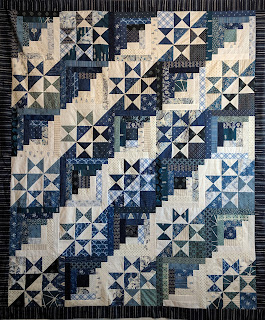
Alternating blue and white Ohio Star and Log Cabin blocks with a navy ikat border
Ohio Star and Log Cabin
farmhouse quilt top

Although our vacation is over, I'm including these photos because they are giving me ideas for quilting.

The final stop on our Gold Country tour was Sutter's Mill, aka Marshall Gold Discovery State Historic Park, original site of the '49 gold rush. We stopped at the Marshall monument (the man who actually discovered the first gold) to soak in the scenery from the top of the hill. It looks so peaceful it's difficult to imagine the crowded conditions when thousands of miners displaced the natives.

A panoramic view of the site from a nearby hillside.
Sutter's Mill/Marshall Gold Discovery site,
Coloma, CA

A few years ago Stephie at Dawn Chorus Studio and Kaja at Sew Slowly discussed walls and Stephie mentioned the two-toned walls in her area (Cornwall?) so imagine my surprise at the wall here. The words are made of lighter-colored river rock embedded in the darker and larger stones. They both made quilts based on the idea but I can only find Kaja's now.

We don't have much hard rock in Texas so while there are a few retaining walls, fencing is used more frequently. What skill it takes to build this wall and embed the contrasting stones so precisely.

This chest-high stone monument marks the location on the American River.
Original site of Sutter's Mill

The original lumber mill washed away years ago and was rebuilt nearby on slightly higher ground. But the monument struck me. How do we notice and then translate ideas from the real world into fabric? Literally? Figuratively? What sparks our ideas if they don't come from another quilt or quilter? And how did that person come up with the idea that strikes us all so strongly?

Slightly uphill was this outcrop where for millennia, Nisenan women ground acorns as evidenced by the chaw-se (mortar holes.) Look at the grouping? Most are close together but a few are further away. Of course, the rock itself created some boundaries but I wonder who sat where? Were the smaller holes used by young children learning the work? Did higher status women sit further away or in the middle of the tightest group? How would this translate into art?

Two collaged photos show indentations in the granite outcrop where generations of Native Americans ground acorns for food.
Grandmother Rock with
chaw-se for grinding acorns

Of course, you know I'll include some geology. Although the Man Lee building originally housed Chinese bank and hardware stores it currently displays an excellent exhibit of the progression of mining. From placer to water wheel to hardrock mines and later highly mechanized operations requiring huge capital outlays.

Walking through this museum visitors walk through the history of California gold mining, including a sharp turn in an "underground" mine tunnel. Excellent!
Two collaged photos show the outside of the building and the entrance to a mockup of an underground mine inside.
Gold mining history exhibit
in Man Lee building

California published Geologic Gems about the geologic features and history of their state parks - an excellent resource before visiting any of them. The final line in the pamphlet on MGDHP says, "The park provides a sociological case study of how the distribution of earth’s mineral resources has influenced the establishment and demographics of societies."

Miners from every country in the world rushed to California in the 1850s, displacing the few natives who survived the onslaught of disease that began in the 16th century. They in turn were displaced as mining operations required larger capital inputs. So individual claims amalgamated into large companies with few {distant} owners while the miners became hourly wage earners with little to no opportunity for that huge payoff.

Even more important gold claims were the water rights. In fact, water is so valuable that the rights throughout the west are generally established by precedence of arrival rather than closeness to the source. Mining required lots of water, causing downstream flooding and legislative action to hold companies responsible for their actions. Those economic consequences closed many of the mines, turning the area into a ghost town.

When the Museum opened we visited to see the films and enjoy the exhibits. My favorite was this small one of dolls used by children of different cultures. The china doll overpowers some of the unique examples behind it, including the duck head and the baby with corn husk clothing.

A Native American duck head on a stick and another of a stone with corn husk skirt bound around it are placed next to a porcelain doll with a painted face and cotton dress.
Dolls from various cultures
in Coloma, CA

Not only is this area is rich in history, they have thoughtfully preserved and explained both the positive and negative aspects.  I plan to visit again next year and hope you will sometime, too.

Enjoy the day, Ann

Tuesday, August 20, 2019

Farmhouse Quilt Top

I forgot to take process photos this week but managed to get the top together. The split Ohio Stars alternate with some easy Log Cabins. Their strong light and dark sides make the furrows highly visible. The log cabin blocks sewed up quickly and the quilt went together like a snap. What a relief after futzing with those split Ohio Stars.

I'd like to consider it done but a narrow border might be better.

Alternating split Ohio Star and Log Cabin blocks in blue and white prints form this quilt top
Ohio Star and Log Cabin farmhouse quilt top

A few miles north of Jamestown is Columbia State Historic Park, a gold rush town integrated into a living town. The proprietors and docents dress in period clothing to share a vision of life: mining, blacksmithing, cooking. There are two hotels and several restaurants. We watched blacksmithing, families riding the stagecoach...

Tourists line up to ride the stagecoach
Stagecoach rides at Columbia State Historic Park

and took a turn in the one lane bowling alley.

A wooden bowling alley with pins that must be reset manually.
Single lane bowling alley, Columbia State Historic Park

Why did this house look familiar to me?* In 1940, the McConnell's bought and restored James Wilson's 1876 home, living here till their deaths. They petitioned the legislature to create a state park commemorating gold rush life - partly to keep the hotel across the street from turning into a brothel.

The white clapboard house sits behind a white picket fence.
Wilson-McConnell House

*It was Gary Cooper's home in the movie High Noon. Although I shouldn't be, I am constantly surprised to find so many classic movie locations around California.

Enjoy the day, Ann

Tuesday, August 13, 2019

A Few More Blocks and Railtown 1897

Setting up more Ohio Star blocks was all I completed this week since we are vacationing. If I had laid them out sooner I might have cut different amounts of each fabric; however, this is all of most of them. That's good from the point of stash reduction but not as good from the point of layout. Still it looks like the scrappiness will work well.

Blue and white blocks laid out on the design wall
Split Ohio Star quilt block progress

We finally toured some of the Gold Country of California. Cleverly, the state highway running through it is 49 and we only traveled the middle section. I've been around the mining towns of the Rockies most of my life but had never made it to this region. The California rush preceded Colorado's by about 10 years but many of the mining techniques and railroading needs were the same. And Californians really embrace their history. Many of the sites are maintained {or at least enriched} by groups of retiree docents who work tirelessly to inform, improve, and assist at these fabulous state sides.

We started at Railtown 1897 in Jamestown, a steam locomotive maintenance and repair facility. The trains were originally established to move supplies up to the claims and gold down to Sacramento. Visitors may tours of the buildings, including the roundhouse, as well as enjoying train and cab rides and special events throughout the year. We enjoyed the informative tour that included many engines and cars before our ride.

Because the stack can easily be changed to mimic steam engines, this "movie star" train has appeared in more films, documentaries, and television shows than any other. Credits include Back to the Future 3, The Virginian, and Petticoat Junction.

A docent in denim coveralls with a red bandana and a railway cap stands with his foot on the rail as he talks about this engine.
The movie star locomotive
at Railtown 1897

This unusual looking engine is a three truck Shay. With gears on the right, the locomotive is not symmetrical but it does make sharper turns.

Three truck Shay locomotive at Railtown 1897

The #19 Hetch Hetchy was originally furnished as an ambulance car and used on the Hetch Hetchy dam project. Later it was used for track inspection and to transport VIPs.

#19 Hetch Hetchy ambulance car at Railtown 1897

After the tour we watched the engineers switch #28 before climbing aboard for a delightful ride.

Engineers move the engine to the opposite side of the passenger cars.
#28 locomotive at Railtown 1897

Enjoy the day, Ann

Tuesday, August 6, 2019

SIL Quilt Begins

My SIL requested a “farmhouse quilt”... several years ago now so I'm only a few years overdue. I had to ask her to explain since I’d never heard the term and had no idea what it meant. Turns out it’s a casual, countrified, blue-and-white quilt.

Lacking many blues in the shades she prefers, a shopping trip was in order. What fun to spend an afternoon at a quilt shop with SIL. And boy, is she serious about blue and white! Upon returning home I went through my stash for a few more fabrics to add a bit more variety.

The stars pieces are all cut. The split Variable Star reminds me of the split Nine Patch. They both accentuate light and dark furrows when sewn. But the pressing is a pain. There is no way I’ve found to have all the seams flat. So a few will be opened. Not my favorite choice.

Here’s where the project stands today.

The first three blocks in a variety of blue and white prints laid out on the design wall
Split Ohio Star quilt blocks

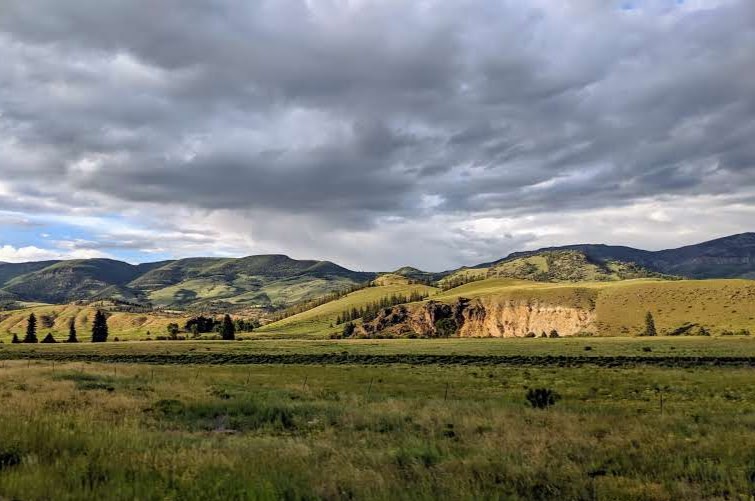
We drove over Slumgullion Pass the weekend. Don't you love that name? It's been raining a bit almost every day adding so many beautiful shades of green; not as common this late in summer.

A green pasture with hills in the distance and heavy clouds.
On the road to Slumgullion Pass

Many herds grazed along the way: Deer in velvet in the middle distance;

The deer are feeding in a meadow near Slumgullion Pass in Colorado.
Deer in velvet
A moose with her calf closer to the roadway;

The female and her calf feed near the road to Slumgullion Pass in Colorado.
Moose and calf
But elk kept their distance. No good shots of those.

Last month I dusted and polished the bookshelves, then organizing a shelf of all the books I have yet to read. Do you buy books that sound interesting and then fail to ever read them? I never thought that was a habit of mine but half of a shelf is laughing at me. The plan is to read or donate them within the year - sort of like turning the hangers backwards and donating unworn clothes after a year. Genghis Khan and the Making of the Modern World was the first finish, a very intriguing look at the Mongals who brought so many innovations to the world.

Enjoy the day, Ann

Tuesday, July 30, 2019

Colorado Shirtwaist

On vacation with sporadic internet service. That’s ok because the scenery is gorgeous, the activities are exciting, and family is close.

One day I tried to quilt but the needle kept skipping so I sewed a shirtwaist dress instead. Hey, it was on my list of projects from the New Year.  A friend helped me adjust the pattern; I brought it in case there was time to work on it. Not perfect but it fits well and the issues are worked out. Hopefully I'll sew another soon.

Green and white striped cotton broadcloth dress.
Shirtwaist dress

We flew over the Great Sand Dunes National Park because our flight detoured around a storm along the Front Range. Wind caused these dunes pile to up against the mountains. Funny how small this park looks from the air. It seems immensely tall and hot each time I visit in person.
.
Exposed sand was blown against the Sangre de Cristo mountain range to form these massive dunes. The wide and shallow Medano Creek fronts the dunes.
Aerial view of Great Sand Dunes National Park

I gave a very short talk and workshop to the San Luis Valley Quilt Guild then a longer workshop at Kathy’s Fabric Trunk in Del Norte which went very well. Class fees went to Colorado wildfire relief and a summer camp program. It felt good to raise money for these causes.

QS took us on a boat trip down the Gunnison River above the Morrow Point Dam and what a treat that was! The weather was perfect, the scenery striking, and the NPS guides informative. We saw Curecanti’s Needle, a 700' granite spire formed by two intersecting faults that was the symbol of the Denver and Rio Grande Western narrow gauge railroad running through the canyon until the 1940s.

700-foot granite spire on the Gunnison River in Colorado was a notable landmark to natives and pioneers.
Curecanti's Needle

The other highlight of the trip was a pair of bald eagles hanging out in a dead tree. Wow!

Enjoy the day, Ann

Tuesday, July 23, 2019

Well Basted; Finally Finished

This quilt was basted two years ago. At that time the sashing was SID but I never could decide how to quilt it. Finally I hung it neatly alongside some tops where it remained until this week. Enough! Propellers turn so they make spiraling air currents and that's a good enough design.

The more I fret about quilting, the more I try to "match" it to the fabric prints. So I considered tracing those large circles, small daisies, and wavy lines. Too constrained. Too many thread changes. The spiral looks cleaner and more effective.

Baby quilt with two sizes of airplane propellers and orange flying geese on dark blue sashing.
Propeller baby quilt

The only problem was the center of the spiral. It's very hard to turn the quilt smoothly in such a tiny radius. I have used FMQ in the center and switched to the walking foot when the circle was larger but it's hard to enough keep the spacing the same with one foot. It's almost impossible with two different feet. Marking a spiral wasn't a good option this time because my marking pens blended into the print.

Because the diameter was too small for a walking foot, the original quilting in the center is not well aligned.
Original spiral quilting
in the center is not well aligned

I resewed it by simply following the printed design of the center. The spiraling starts at the edge of the center circle. The lines still have some irregularities but those are much less obvious.

Center is re-quilted by following the print with a walking foot and transitioning to a spiral when the diameter is larger.
Center is quilted by following
the print with a walking foot

Then I pulled fabric for the binding. Lots and lots of fabrics. Red, blue, light blue, grey, white, striped. You name it; I tried it. Most were too harsh. The pale grey striped border called for a light- colored binding. Here are three of my final ideas. The black at the bottom made a very severe line as did all those strong blues and reds. I liked the grey and yellow but preferred the soft blue with orange-red flowers... even though it looks like a 30's reproduction print. It ties to the center better.

Light blue, yellow, and black prints are laid out as possible bindings.
Binding choices for Propeller baby quilt

The back is a soft twill-like weave in baby pink that was a bit wider than normal so it didn't need piecing. I wish I knew the name of the weave. It drapes beautifully; not a bit stiff like my idea of twill.

The light blue print makes a quiet binding that does not compete with the quilt blocks.
Binding detail of Propeller baby quilt

One more detail photo. Without realizing it,  Propeller baby quilt is a small exercise in scale change, too. Woo-hoo; invitation met - even if it is a bit late.

The large center propeller block has four fussy cut blades with medallions. It is surrounded by orange flying geese on bright blue as sashing.
Propeller baby quilt detail

Previous posts:
  1. Leftover blocks
  2. Designing the top
  3. Basted and ready to quilt

Quilt Details
Size: 44" x 44"
Designs: Airplane Propellers and Flying Geese
Batting: Mountain Mist 100% cotton
Thread: Gutterman 50 wt cotton, grey on front, pink on back
Quilting: SID and Spiral with walking foot

Enjoy the day, Ann

Tuesday, July 16, 2019

Is the Tethys Waves Quilt Top Finished?

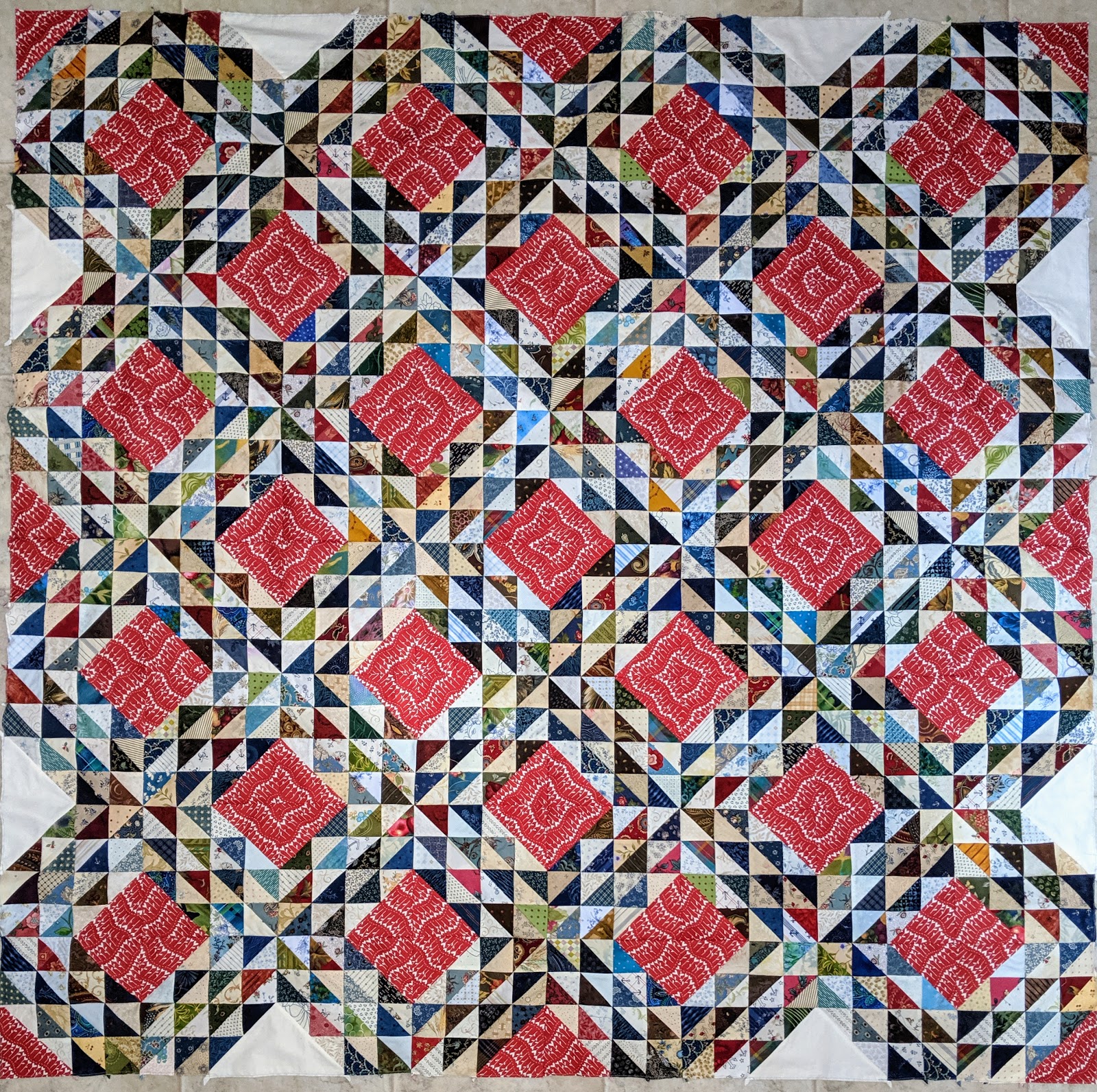
I'm uncertain whether I like this top or not. These are all the red triangles. After testing several other red fabrics I thought a cream solid looked best to fill in the missing sections. Now I'm not so sure.

Small HSTS in blues, reds, greens, golds, and creams surround the large red and white print squares
Tethys Waves, an Ocean Waves quilt top

Perhaps the cream should have been an inner round? Or perhaps it should be dark? Would applique help? Does it need a narrow cream border? I will ponder this for a while.

Meanwhile, DH and I saw the Van Gogh exhibit at the Houston Museum of Art. It was the last week and I was determined to make it. And I’m glad I did. So much in exhibitions has changed for the better. The layout made the show as much a biography, travelogue, and art history lesson as a simple art exhibit.

The curators enlarged several of van Gogh’s sketches and placed them, along with large aerial maps in each room to highlight the different areas Vincent traveled while painting. BTW, did you know he only painted during the last decade of his life and still left over 900 works?

Enlarged sketches by Vincent van Gogh cover many walls and highlight his creative journey
Enlarged sketches by Vincent van Gogh
highlight his creative journey
at the Houston Museum of Fine Arts

The exhibit brought together complimentary sketches and paintings like this pair of Montmartre.

A sketch and a painting of the same view of Montmartre by Vincent van Gogh
Sketch and painting of Montmartre
by Vincent van Gogh

It highlighted his friendship with Paul Gaugin who visited Vincent in Arles where they set frequently set their easels side by side as each painted the same scene or model. For example, Portrait of a Man (Joseph-Michel Ginoux?) by van Gogh is believed to be the proprietor of the Cafe de la Gare in Place Lamartine, Arles. A photocopy of Gaugin's painting with the same name was included on the information card. Although at a different angle, it is the same man in the same clothes with the same lime background.

The cafe owner wears a formal suit and is painted on a lime green background.
Portrait of a Man (Joseph-Michel Ginoux?)
 by Vincent van Gogh


Van Gogh considered wheat a symbol of life. He used it repeatedly as the focus and background of his portraits of peasants such as this pair.

A peasant woman with a straw hat and a blue dress sits in a field of wheat in the painting on the left. On the right is a painting of a similar field of wheat.


As you all know, van Gogh was repeatedly entered an asylum near the end of his life but continued to paint there. I think The Garden of the Asylum at Saint-Remy is my favorite in the exhibit for the movement of the leaves and his masterful use of black outlining.

Two collaged photos show a portion of the painting and a detail of the brushstrokes.
The Garden of the Asylum at Saint-Remy
by Vincent van Gogh

Mel Beach's Summer Lovin' projects, with their black thread outlining and writing invoke a similar feeling in fabric.

Enjoy the day, Ann

Tuesday, July 9, 2019

Still Sewing

Sewing continues although I see little progress. {Sigh.} However, I do like the way the triangles twinkle. It's the mix of mediums and darks that causes it. It just takes a bit of careful placement so the lightest of the darks is still darker than the surrounding lights. Make sense?

Here's an example of a light green surrounded by several cream triangles.

One scrap quilt block with a large red and white print square in the center.
Ocean Waves quilt in progress

The same green fabric appears again next to one of the red diamonds but this time it's next to a darker light... much closer in value to the green than the creams above. This green won't twinkle as much because the neighboring value is so close. At least, that’s what I think.

A detail view of four blocks sewn together.
Ocean Waves quilt in progress

The San Jose Museum of Quilts and Textiles is currently exhibiting H2OH, a SAQA member show juried by Linda Gass who gave a lecture one evening about how she approaches her art. Linda made a second career as an artist focusing on water resources. Her beautiful work combines silk fabrics, hand dyeing and machine quilting as she interprets maps of various areas of concern.

Front and back views of the soft sculpture. The front is a woman's head.The back shows the view in her mind of a child with a yellow inner tube jumping into a pool
Memory of Water by Susan Else

This three-dimensional sculpture intrigued me most - Memory of Water by Susan Else. It looks like wood but it's all fabric. Growing up in Sacramento, Susan remembers that water was free and wasted. Great fun for a child but a sorrowful memory of an adult.

On another note, I saw this picture at a San Francisco hotel. It glittered in the light so at first I thought it was a diamond painting like Julie's been making recently.

The portrait is made of painted Phillips head screws with subtle variations of height to enhance the image.
Art made of screws

A closer look revealed it's made of screws, attached at different heights and painted single and double colors.

Enjoy the day, Ann

Tuesday, July 2, 2019

Tethys Waves Quilt in Progress

About the time the first Ocean Waves quilt was laid out, I had an epiphany. Just combine both triangles in one quilt. The concentric triangles are in the center with a round of perpendicular ones circling the outside.

Quilt pieces laid out on the design wall for form an Ocean Waves pattern.
Tethys Waves quilt top in progress

And it has a name. The Tethys Sea existed during the Mesozoic Era but modern remnants include the Mediterranean, Black, Caspian, and Aral Seas. Since many of these scraps are both ancient and reproduction, Tethys Waves sounds like the perfect name.  At least it amuses me.

But there's a problem I constantly forget... Once all the design decisions are made, there is nothing left but to sew the units together. Tethys Waves is many, many tiny QSTs.

Two collaged photos show sewing progress on the Ocean Waves quilt blocks.
Tethys Waves quilt in progress

When the first units were sewed and laid out it looked so neat. "Almost done!" I thought. But no. I match more points and pin. Sewing sections together dislocates them from the next section. I have to put them back on the wall to ensure I'm sewing them correctly. And I added some cream triangles on the border so all the red triangles are used... which just makes more sewing. And I unsew the intersections at the back to allow them to spin. And I press carefully without steam because of the bias edges.

Two collaged photos show more progress in construction of the Ocean Waves quilt top
Tethys Waves quilt in progress -
only ten more seams to go

And  all I want is to be done. Sigh.

Enjoy the day, Ann